Drivetrain Quality
RC Toy Gear Noise and Vibration: Buyer Evaluation
An RC toy will create motor and drivetrain sound, but the character and variation should be consistent with the approved design. Buyers need a repeatable comparison method instead of a vague requirement that the vehicle be quiet.
Direct answer: Define the operating condition, reference sound and abnormal indicators, then combine listening with function and physical inspection before accepting production. This guide is written for importers, distributors, retailers and private-label teams that need to make a defensible buying decision before they approve an RC toy sample or release an order.
How procurement teams should use this guide
Buyer situation: Retail buyers and quality teams want to distinguish normal operating sound from assembly, gear or motor problems. Noise is often judged subjectively, yet abnormal sound can signal misalignment, rubbing, damaged teeth or inconsistent assembly.
Use the sections below as a discussion framework for the exact product and destination, not as a universal specification. Begin with the approved vehicle, controller, battery, accessories and packaging revision. Mark each point as confirmed, open, not applicable or requiring specialist review, then assign an owner and due date. Evidence should identify the model and production version it covers. When a supplier answer depends on an early sample, a related product or an assumed market rule, keep the point open until the relevant production record, qualified adviser or official source supports the decision. This approach turns research into a controlled sourcing action without implying that one checklist replaces engineering, laboratory, legal, customs or transport expertise.
Good RC toy sourcing is a connected process. Product application, customer requirements, factory testing, packaging preparation and shipment inspection all need to point to the same approved configuration. The practical objective is not to add paperwork; it is to make decisions clear enough that the factory, buyer and logistics partners can act without guessing.
Use these articles alongside our RC toy product range, Shenzhen factory overview and quality-control process to turn a buying question into a project brief.
For the connected buying decisions, see RC Toy Gear Ratio and Torque Selection for Buyers, How to Choose an RC Toy Manufacturer for Your Market, RC Toy Sourcing Checklist: What to Confirm Before You Place an Order.
1. Define the reference configuration
Use the same vehicle revision, battery state, body, tires and controller mode for comparisons.
Body shells and surfaces can amplify sound. A partially charged battery may change motor speed and pitch. Record whether the check is performed with wheels unloaded, on a fixed surface or during a driving route. Preserve an approved production-representative sample so inspectors can compare character rather than relying on memory.
During factory testing and shipment preparation, use define the reference configuration as a named handoff. Record the agreed condition, identify the person who checks it, and keep the result with the project file. This does not need to become a complicated report: a controlled product specification, dated sample photos, a packing reference and a short inspection record are often enough to make customer requirements traceable. The important point is that a later sample change, production question or buyer request can be checked against a visible reference rather than memory.
Buyer check
Before moving forward, ask the supplier to show how this point is captured in the product brief, approved sample record, production preparation or shipment inspection plan. A clear answer should name the reference, the responsible person and the timing of the check. If the answer cannot be tied to an approved configuration, treat it as an open decision rather than an agreed production instruction.
2. Separate normal and abnormal sound
Describe grinding, clicking, rubbing, oscillation or sudden pitch change with location and operating state.
A generic noisy label is difficult to investigate. Ask whether the sound occurs forward, reverse, steering, under load or only at one wheel position. A short video or audio reference may support communication, but microphone distance and automatic processing can distort level. Use recordings as evidence alongside physical examination, not as the sole acceptance method.
During factory testing and shipment preparation, use separate normal and abnormal sound as a named handoff. Record the agreed condition, identify the person who checks it, and keep the result with the project file. This does not need to become a complicated report: a controlled product specification, dated sample photos, a packing reference and a short inspection record are often enough to make customer requirements traceable. The important point is that a later sample change, production question or buyer request can be checked against a visible reference rather than memory.
Buyer check
Before moving forward, ask the supplier to show how this point is captured in the product brief, approved sample record, production preparation or shipment inspection plan. A clear answer should name the reference, the responsible person and the timing of the check. If the answer cannot be tied to an approved configuration, treat it as an open decision rather than an agreed production instruction.
Share your target market, product category and expected quantity for a focused recommendation.
3. Check gears and alignment
Inspect gear seating, mesh, shaft support, lubrication condition and enclosure contact when abnormal noise appears.
Do not change lubricant or gear material without engineering review. A tight mesh may increase noise and current draw; a loose mesh may click or wear. Look for debris, damaged teeth, eccentric gears and molded distortion. Compare suspected parts with known-good units and record the production lot before disassembly.
During factory testing and shipment preparation, use check gears and alignment as a named handoff. Record the agreed condition, identify the person who checks it, and keep the result with the project file. This does not need to become a complicated report: a controlled product specification, dated sample photos, a packing reference and a short inspection record are often enough to make customer requirements traceable. The important point is that a later sample change, production question or buyer request can be checked against a visible reference rather than memory.
Buyer check
Before moving forward, ask the supplier to show how this point is captured in the product brief, approved sample record, production preparation or shipment inspection plan. A clear answer should name the reference, the responsible person and the timing of the check. If the answer cannot be tied to an approved configuration, treat it as an open decision rather than an agreed production instruction.

4. Review motor and electrical influence
Confirm that the motor mount, wires, suppression components and power supply match the approved design.
A loose motor or wire touching a rotating part can mimic gearbox noise. Electrical variation can alter speed or create intermittent response. Observe heat or odor only under safe, defined conditions and stop if abnormal behavior appears. Production sound review is not a substitute for applicable electrical or radio compliance testing.
During factory testing and shipment preparation, use review motor and electrical influence as a named handoff. Record the agreed condition, identify the person who checks it, and keep the result with the project file. This does not need to become a complicated report: a controlled product specification, dated sample photos, a packing reference and a short inspection record are often enough to make customer requirements traceable. The important point is that a later sample change, production question or buyer request can be checked against a visible reference rather than memory.
Buyer check
Before moving forward, ask the supplier to show how this point is captured in the product brief, approved sample record, production preparation or shipment inspection plan. A clear answer should name the reference, the responsible person and the timing of the check. If the answer cannot be tied to an approved configuration, treat it as an open decision rather than an agreed production instruction.
5. Evaluate vibration and driving behavior
Connect sound observations with straight tracking, wheel runout, steering response and chassis movement.
A visually bouncing wheel or vibrating body may identify the source faster than sound level. Drive representative units on the same clean surface and route. Avoid high-speed free-running for longer than the approved method because it may create conditions not representative of normal use. Record whether vibration affects control or only cosmetic perception.
During factory testing and shipment preparation, use evaluate vibration and driving behavior as a named handoff. Record the agreed condition, identify the person who checks it, and keep the result with the project file. This does not need to become a complicated report: a controlled product specification, dated sample photos, a packing reference and a short inspection record are often enough to make customer requirements traceable. The important point is that a later sample change, production question or buyer request can be checked against a visible reference rather than memory.
Buyer check
Before moving forward, ask the supplier to show how this point is captured in the product brief, approved sample record, production preparation or shipment inspection plan. A clear answer should name the reference, the responsible person and the timing of the check. If the answer cannot be tied to an approved configuration, treat it as an open decision rather than an agreed production instruction.
6. Create a practical line check
Use a short standardized routine and clear escalation samples for final function testing.
Operators can identify gross grinding, clicking or rubbing when the routine and reference are stable. They should not be asked to make precise acoustic judgments in a variable factory environment. Suspect units need a separate diagnostic station, and repaired units should repeat the full drive and steering sequence before packing.
During factory testing and shipment preparation, use create a practical line check as a named handoff. Record the agreed condition, identify the person who checks it, and keep the result with the project file. This does not need to become a complicated report: a controlled product specification, dated sample photos, a packing reference and a short inspection record are often enough to make customer requirements traceable. The important point is that a later sample change, production question or buyer request can be checked against a visible reference rather than memory.
Buyer check
Before moving forward, ask the supplier to show how this point is captured in the product brief, approved sample record, production preparation or shipment inspection plan. A clear answer should name the reference, the responsible person and the timing of the check. If the answer cannot be tied to an approved configuration, treat it as an open decision rather than an agreed production instruction.
7. Use claims carefully
Do not market a vehicle as silent or low-noise without a defined basis and relevant test conditions.
Product category, floor and distance affect perception. Describe design features factually and keep comparative data tied to the tested configuration. At shipment inspection, compare sampled units with the approved reference and investigate clusters rather than accepting or rejecting an entire order from one subjective observation.
During factory testing and shipment preparation, use use claims carefully as a named handoff. Record the agreed condition, identify the person who checks it, and keep the result with the project file. This does not need to become a complicated report: a controlled product specification, dated sample photos, a packing reference and a short inspection record are often enough to make customer requirements traceable. The important point is that a later sample change, production question or buyer request can be checked against a visible reference rather than memory.
Buyer check
Before moving forward, ask the supplier to show how this point is captured in the product brief, approved sample record, production preparation or shipment inspection plan. A clear answer should name the reference, the responsible person and the timing of the check. If the answer cannot be tied to an approved configuration, treat it as an open decision rather than an agreed production instruction.
Illustrative buyer scenario
Two finished RC buggies reach the same speed, but one has a periodic clicking sound. The team tests both with the same charged battery and raised wheels, then repeats the check on the floor. Inspection finds a gear with damaged teeth from an assembly interference. The affected batch is contained and gear handling is corrected. This illustrative scenario shows why a sound check should identify patterns and conditions. A simple loudness judgment could miss a periodic mechanical defect or reject normal variation caused by surface and body resonance.
Reference and compliance note
This article is practical buyer guidance, not legal, safety or transport advice. For the selected product and destination, verify applicable requirements with qualified laboratories, compliance advisers, carriers or authorities. For further reading, see FTC advertising substantiation guidance: Official U.S. guidance on having a reasonable basis for objective marketing claims.
Photography plan for this article
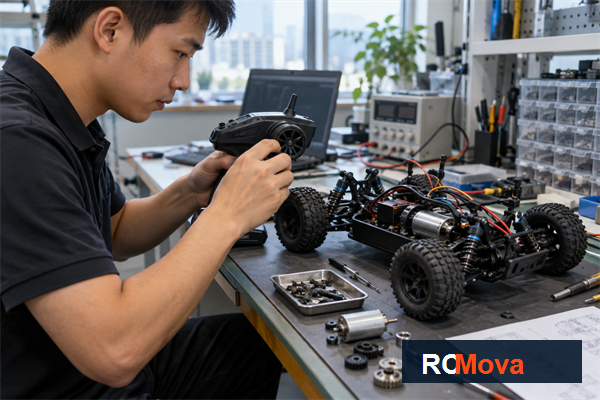
Article hero image — After the opening section
Image title: RC Toy Gear Noise and Vibration: Buyer Evaluation — RC toy sourcing overview
Caption: Controller selection should be tested as part of the complete vehicle and user experience. Article focus: rc toy gear noise.
ALT text: Asian electronics technician testing an RC controller and vehicle components; rc toy gear noise buyer guide
Image size: 600 × 400 px
AI photography prompt: Documentary commercial photography for RC Toy Gear Noise and Vibration: Buyer Evaluation, realistic RC toy products and Shenzhen factory setting, Asian staff if people appear, natural light, authentic details, no invented certificates, no text overlays, 3:2 landscape
In-article supporting image — Before the FAQ section
Image title: RC Toy Gear Noise and Vibration: Buyer Evaluation — RC toy quality and shipment check
Caption: Production review for rc toy gear noise before the export handoff.
ALT text: Asian quality team reviewing rc toy gear noise with a remote control toy at the factory
Image size: 600 × 400 px
AI photography prompt: Realistic editorial photography showing a buyer checking rc toy gear noise against an RC toy sample and shipment records, Asian staff if people appear, natural industrial lighting, no text or fabricated logos, 3:2 landscape
Frequently Asked Questions
What should buyers check first about define the reference configuration?
Use the same vehicle revision, battery state, body, tires and controller mode for comparisons. Body shells and surfaces can amplify sound. A partially charged battery may change motor speed and pitch. Record whether the check is performed with wheels unloaded, on a fixed surface or during a driving route. Preserve an approved production-representative sample so inspectors can compare character rather than relying on memory.
How should buyers verify review motor and electrical influence?
Confirm that the motor mount, wires, suppression components and power supply match the approved design. A loose motor or wire touching a rotating part can mimic gearbox noise. Electrical variation can alter speed or create intermittent response. Observe heat or odor only under safe, defined conditions and stop if abnormal behavior appears. Production sound review is not a substitute for applicable electrical or radio compliance testing.
What should be confirmed before shipment?
Do not market a vehicle as silent or low-noise without a defined basis and relevant test conditions. Product category, floor and distance affect perception. Describe design features factually and keep comparative data tied to the tested configuration. At shipment inspection, compare sampled units with the approved reference and investigate clusters rather than accepting or rejecting an entire order from one subjective observation.
Conclusion: turn the decision into a working plan
Define the operating condition, reference sound and abnormal indicators, then combine listening with function and physical inspection before accepting production. When the selected product, sample, documentation, inspection points and shipment handoff are visible, the buying team can move with greater confidence and fewer avoidable changes.
Send Your Requirements